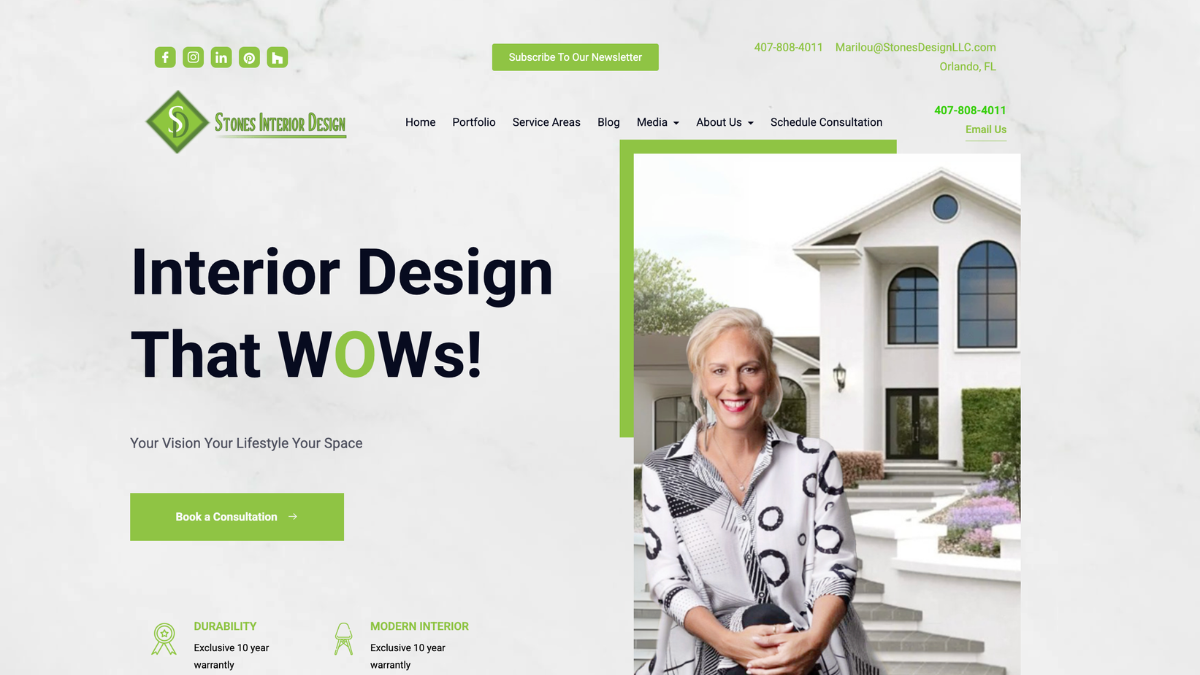
Marilou Stones is an award-winning interior designer with over thirty years of experience, serving homeowners and commercial clients across Central Florida from her studio in Winter Garden. She is an ASID member, her portfolio is stunning, and her reputation in the local market is strong. But when we first looked at her online presence, none of that came through. The website had no traffic. Social media followers were low. There was no newsletter. For a designer of Marilou’s caliber, the digital side of the business simply did not exist in any meaningful way.
That is a problem we see often with established service professionals. The work speaks for itself in person, but online — where most people now start their search for an interior designer — there is nothing to find. Digital marketing for interior designers is not about reinventing the business. It is about making the quality that already exist visible to the people who are actively looking for it.
Where Stones Design LLC’s Online Presence Was Before We Started
The website had a deeper problem than just low traffic — it was sending the wrong message entirely. The brand name, Stones Design, has led to content that mixed interior design with stonework and countertop fabrication references. If you landed on the homepage, you could not immediately tell whether this was an interior design studio or a stone supplier. For a designer with Marilou’s credentials and portfolio, that confusion was costing real business.
The site structure was cluttered. Too much text, too many images competing for attention, and no clear hierarchy guiding visitors toward the information they needed. The layout did not highlight Marilou’s strongest project photography — which is her best sales tool. And the overall design felt dated, which is particularly damaging for an interior designer whose entire value proposition is aesthetic expertise.
Social media was active but underdeveloped. Follower counts were low, posting was not consistent, and the content did not match the quality of Marilou’s actual work. There was no newsletter at all — meaning the business had no way of staying in touch with past clients, nurturing leads, or reaching new prospects beyond word of mouth.
Rebuilding the Stones Design Website with Interior Design Leading Every Page
The first thing we did was strip out every reference to stonework and countertops. The homepage needed to present Stones Design LLC as an interior design studio, full stop. Interior design now leads each section of the site, with dedicated space to highlight Marilou’s portfolio and strengthen her personal brand presence. When a homeowner or commercial client lands on the page, they immediately see the work, understand the service, and get a sense of who Marilou is a designer.
We simplified the page structure to create a smoother flow and easier navigation. The unnecessary text was cut. Competing images were removed. The layout now follows a clean, modern direction that highlights Marilou’s strongest project photography to create a polished first impression. The website redesign for this interior designer was not about adding more — it was about removing everything that was getting in the way of the work speaking for itself.
We also built service area pages targeting key Central Florida locations — Winter Garden, Apopka, and Ocoee — so the site could start capturing search traffic from homeowners in those areas who are actively looking for an interior designer nearby. Each page was written with local SEO in mind, positioning Marilou as the go-to designer in her market.
How Should an Interior Designer’s Website Be Structured to Attract Clients?
Lead with the portfolio. Homeowners hiring an interior designer want to see the work before they read anything else. The homepage should highlight the designer’s strongest projects within the first scroll, followed by a clear explanation of services, the designer’s credentials, and an easy path to get in touch. Keep the structure clean and the navigation simple. If a visitor must click more than twice to find what they are looking for, the site is working against you. For local designers, service area pages targeting specific towns or neighborhoods are essential for showing up in search results when potential clients are looking for help nearby.
How We Built a Social Media, Newsletter, and Contact Seeding System for Stones Design
Once the website was right, we built the channels around it. The social media strategy followed the same principle as the website: let the work lead. We matched the brand’s look and feel across all social platforms — Facebook, Instagram, LinkedIn, Pinterest, and Houzz — so the brand identity is consistent everywhere a potential client might find Marilou. Content now goes out on a structured calendar, with portfolio highlights, design tips, and community-focused posts rotating across the week.
The newsletter was built from scratch. Before we started, Stones Design had no email marketing at all. We set up a monthly newsletter that goes out to Marilou’s existing client list, keeping past clients engaged and reminding them that the studio is still active and available. But we did not stop at existing contacts.
We also implemented contact seeding — harvesting relevant prospects in the Central Florida market who fit the profile of someone likely to need interior design services. Homeowners, property managers, realtors, and commercial property owners who were not previously on Marilou’s radar are now receiving the newsletter as additional recipients. These are people who need the service but did not know the brand existed. That is the difference between waiting for leads to find you and putting your brand in front of the right people proactively.
Does Social Media Marketing Work for Interior Designers?
Interior design is one of the most visual industries there is, which makes it a natural fit for social media — particularly Instagram and Pinterest. But posting pretty photos is not a strategy. What works is consistent, branded content that highlights real projects, demonstrates expertise, and connects with the local audience. For Stones Design, we built a content system where every post serves a purpose: portfolio posts attract new followers, design tips build authority, and community content builds the personal connection that turns followers into enquiries.
What Changed After the Stones Design LLC Digital Overhaul
The difference is night and day. The website at stonesdesignllc.com now clearly presents Stones Design LLC as an interior design studio led by an award-winning designer with three decades of experience. There is no ambiguity about what the business does. The portfolio leads. The messaging is focused. The design is clean and modern. Visitors can find what they need and take action without friction.
Social media now has a consistent presence across five platforms, with content that matches the quality of Marilou’s actual work. The newsletter reaches both existing clients and newly seeded contacts every month — a channel that simply did not exist before. The brand is now reaching people in Central Florida who need interior design services but had no previous way of discovering Stones Design. That is the shift: from invisible online to actively present in the market.
What This Means If You are a Service Professional with a Weak Online Presence
If you are excellent at what you do, but your website, social media, and email marketing do not reflect that, you are relying entirely on referrals and word of mouth. That works — until it does not. The Stones Design project is a clear example of what happens when you build a proper digital system around an established professional: the quality that already exists becomes visible to a much larger audience.
The Forever Traffic system is designed for exactly this situation. Website, content, social, email, and contact seeding all working together so the people who need your services can find you. For Marilou, it meant going from zero traffic to a full, active digital presence. The same approach works for any service professional whose online presence has not caught up with their reputation.
What Is Contact Seeding and How Does It Help Small Businesses Find New Clients?
Contact seeding is the process of identifying and sourcing potential clients who fit your ideal customer profile but are not currently in your database. For Stones Design, we harvested contact details for homeowners, realtors, property managers, and commercial property owners in Central Florida — people who are likely to need interior design services but had no previous connection to the brand. These contacts receive the monthly newsletter, putting Stones Design in front of a relevant audience that traditional marketing would never have reached. It is not cold outreach — it is putting valuable content in front of the right people at the right time.
The Stones Design LLC Takeaway
Digital marketing for interior designers starts with getting the fundamentals right: a website that leads with the portfolio, clear positioning that matches the designer’s actual expertise, and a content system that keeps the brand visible. Stones Design LLC went from zero website traffic, low social media followers, and no newsletter to a fully connected digital presence — and the brand is now reaching the Central Florida market properly for the first time.
If your business has the quality but not the visibility, the system works. We have seen it firsthand.
- Book a free Digital Marketing Audit and we will show you exactly what the system would look like for your business.
- Download the Genie Solution Brochure to see the full Forever Traffic system step by step.
- Or get in touch — no pressure, just a conversation about where you are and where you want to be.
FAQ Section
How long does it take for a new website to start generating traffic?
It depends on the starting point and the competitiveness of the market, but most redesigned websites with proper SEO and local service area pages begin to see organic traffic improvements within three to six months. Paid channels and social media can drive traffic sooner, but sustained organic growth requires consistent content production, backlink building, and technical optimization working together over time.
What is the best social media platform for interior designers?
Instagram and Pinterest are the strongest platforms for interior designers because the work is inherently visual. Instagram builds a following and drives enquiries through portfolio content and design tips. Pinterest generates long-term referral traffic as pins continue to surface in search results months after posting. LinkedIn and Facebook serve different purposes — professional networking and community engagement. The best approach is to be active on the platforms where your clients spend time and post consistently.
How does contact seeding work for small businesses?
Contact seeding involves sourcing relevant prospects who match your ideal customer profile but are not currently in your database. These contacts are added as newsletter recipients, so they receive your regular content. For a local service business like an interior designer, this means identifying homeowners, realtors, and property managers in the target area and putting the brand in front of them through valuable, non-pushy content. It is a way of expanding your reach beyond existing referrals.
Should an interior designer’s website focus on portfolio or services?
Portfolio first, services second. Homeowners hiring an interior designer make their initial decision based on whether they like the work they see. The portfolio is your strongest conversion tool. Services should be clearly explained, but they support the portfolio rather than replace it. A clean website structure that leads with project photography and follows with service descriptions and credentials gives visitors the information they need in the order they naturally want it.
Can digital marketing help an interior designer who already has a strong local reputation?
Absolutely. A strong local reputation means the quality is already proven — digital marketing makes that quality visible to a much wider audience. Many established designers rely entirely on word of mouth, which limits growth to existing networks. A proper digital presence — website, social media, newsletter, and contact seeding — puts the brand in front of homeowners and businesses who need the service but do not yet know the designer exists.
Comments are closed