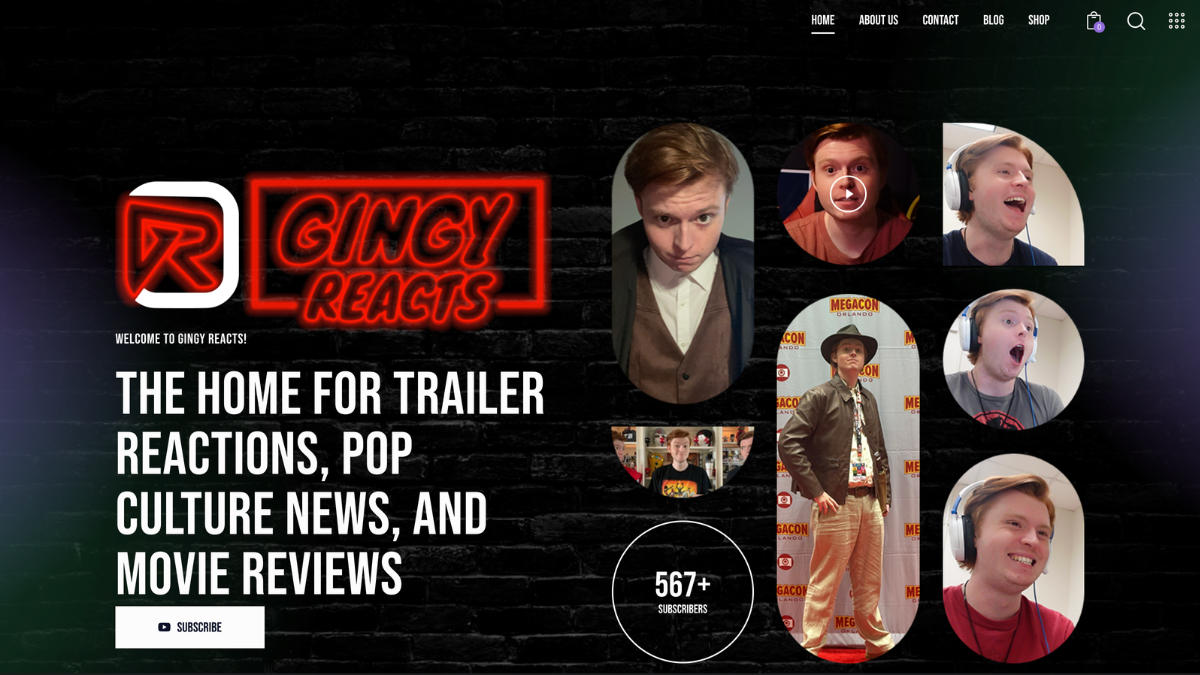
This one is personal. Gingy Reacts is a YouTube entertainment channel hosted by Harry Sandbrook — my son. The channel started as a passion project: reacting to the latest trailers, reviewing movies, and diving deep into geek culture, fandom analysis, and everything the entertainment universe has to offer. Harry built a genuine audience on YouTube through personality, consistency, and a real love for the content. But a YouTube channel, no matter how good, is just one platform. And a creator who only exists on one platform is one algorithm that changes away from invisibility.
We saw an opportunity to do something we had not done before: take the digital marketing system we use for businesses and apply it to a content creator. Could we take a YouTube channel and build it into a proper brand with its own website, a multi-platform social presence, and a content strategy that extends the audience beyond a single platform? That was the experiment. And it worked.
Where Gingy Reacts Started: A Strong YouTube Channel with No Wider Digital Presence
Before we got involved, Gingy Reacts existed entirely on YouTube. That is not unusual for content creators — most start on one platform and stay there. The channel had an engaged audience, a clear niche in entertainment reactions and reviews, and a host with genuine on-screen charisma. But there was no website, no presence on other social platforms, and no strategy for turning YouTube viewers into a broader community.
The risk of a single-platform strategy is real. YouTube’s algorithm changes constantly. A creator’s content can get deprioritized overnight for reasons that have nothing to do with quality. If your entire audience lives on one platform that you do not own, you are building rented land. The solution is the same for creators as it is for businesses: diversify your presence, own your home base, and build a system where platforms feed each other.
Building a Dedicated Website to Give Gingy Reacts a Home Base
The first thing we built was the website: gingyreacts.com. For a content creator, a website does something no social platform can: it gives the brand a permanent, owned home. YouTube can change its algorithm. Instagram can change its reach. TikTok can change its rules. But the website belongs to the creator. It is the one place where the audience can always find you.
We designed the site to reflect on the Gingy Reacts brand — energetic, fun, visually bold, and built around the content. The site serves as a hub that brings together videos, social links, and the broader Fandom Multiverse identity that Harry has built. It is not a generic creator portfolio template. It is a destination that feels like an extension of the channel itself, designed to convert casual viewers into dedicated fans who follow across multiple platforms.
Why Does a YouTuber Need a website?
Because you do not own your YouTube channel the way you own a website. YouTube is a distribution platform, not a home base. A website gives a content creator several things they can’t get on YouTube alone: an owned space that isn’t subject to algorithm changes, a central hub that connects all social platforms, a place to build an email list of dedicated fans, better search visibility for brand-related queries, and a professional presence for sponsorship and brand partnership conversations. For any creator serious about building a long-term brand rather than just maintaining a channel, a website is the foundation.
Expanding Gingy Reacts from YouTube to Five Platforms
With the website in place, we expanded the brand’s social presence across four additional platforms. Gingy Reacts now has an active presence on YouTube (the original home), Facebook, Instagram, TikTok, and LinkedIn. Each platform serves a different purpose in the overall strategy.
YouTube remains the core content platform — the long-form reactions, reviews, and deep dives live there. TikTok and Instagram handle short-form content: clips, highlights, quick takes, and behind-the-scenes moments that introduce the brand to new audiences. Facebook builds community and drives discussions around new releases and entertainment news. LinkedIn might seem like an unusual choice for an entertainment channel, but it positions Gingy Reacts as a professional brand for partnership, collaboration, and industry visibility.
The key is that content is adapted for each platform, not just cross-posted. A ten-minute YouTube reaction gets a sixty-second highlight reel on TikTok, a visually engaging carousel on Instagram, a discussion-starter post on Facebook, and a brand-building update on LinkedIn. Same content universe, different formats, different audiences. That is how a multi-platform content strategy works: each platform feeds the others rather than duplicating them.
How Can a Content Creator Build a Brand Beyond a Single Platform?
Start with an owned home base — a website. Then expand to platforms where your target audience already spends time, adapting content for each format rather than copying and pasting. Build a consistent visual identity and voice across every platform, so the brand is recognizable wherever someone encounters it. And think of each platform serving a role in a system: one platform for long-form content, one or two for short-form discovery, one for community, and one for professional positioning. The goal is not to be everywhere — it is to be in the right places with the right content, all pointing back to your own hub.
How the Gingy Reacts Brand Continues to Grow Across Platforms
The brand is thriving. Gingy Reacts has gone from a single YouTube channel to a multi-platform entertainment brand with a dedicated website and active presence across five social platforms. The audience is growing, the content reaches a wider range of viewers across different formats, and the brand identity — the Fandom Multiverse — is now consistent everywhere fans encounter it.
What is particularly satisfying about this project is that it demonstrates the versatility of the system we have built at Shergroup Digital. The same principles that work for law firms, contractors, and networking groups work for a content creator in the entertainment space. Website as the hub. Multi-platform social presence. Consistent brand identity. Content adapted for each channel. It is the same Forever Traffic framework, applied to an entirely different kind of client.
You can explore the full brand experience at gingyreacts.com and follow the Fandom Multiverse across all platforms.
What This Means If You are a Content Creator Who Wants to Build a Real Brand
If your entire brand lives on one platform, you are vulnerable. It does not matter how many subscribers or followers you have — if that platform deprioritizes your content, limits your reach, or changes its monetization rules, your audience disappears overnight. The fix is to build a brand that exists independently of any single platform: a website you own, a presence on multiple channels, and a content system that turns viewers on one platform into fans across all of them.
Gingy Reacts is proof that this works for creators, not just businesses. The investment in a proper digital infrastructure pays off in audience growth, brand resilience, and professional opportunities that a single-platform creator simply cannot access.
What Platforms Should a YouTube Creator Expand To?
It depends on the content niche, but for most creators the priority order is TikTok for short-form discovery and reaching new audiences, Instagram for visual branding and community, Facebook for community discussion and sharing, and LinkedIn for professional visibility and partnership opportunities. The website sits at the center as the owned hub. The specific mix matters less than the principle: each platform should serve a distinct purpose in growing the brand, and content should be adapted — not just reposted — for each one.
The Gingy Reacts Takeaway
Digital marketing for content creators follows the same core principles as digital marketing for any business: own your home base, diversify your presence, and build a system where every platform feeds the others. Gingy Reacts went from a YouTube-only channel to a multi-platform entertainment brand with a dedicated website, five active social channels, and a growing audience across all of them. The Fandom Multiverse is alive and expanding.
If you are a content creator, influencer, or personal brand looking to build a proper digital presence beyond a single platform, we would love to talk about what that looks like for you.
- Book a free Digital Marketing Audit and we will map out what a multi-platform brand strategy could look like for your channel.
- Download the Genie Solution Brochure to see how the Forever Traffic system works — for businesses and creators.
- Or get in touch — whether you are a creator, a brand, or a business, the conversation starts the same way.
FAQ Section
How much does it cost to build a website for a YouTube channel?
Shergroup Digital’s Forever Traffic system starts at $1,299 per month (US) or £999 per month (UK), plus tax, on a 12-month minimum. This includes website build, social media management across multiple platforms, content production, SEO, and monthly reporting. For content creators, the system is adapted to focus on brand building, audience growth, and multi-platform content strategy rather than traditional lead generation.
Should a YouTuber have a presence on TikTok?
For most YouTube creators, yes. TikTok is a discovery platform — its algorithm surfaces content to people who do not already follow you, which makes it one of the most effective ways to reach new audiences. Short clips, highlights, and behind-the-scenes content from your YouTube videos can be adapted for TikTok to introduce your channel to viewers who might never find you through YouTube’s own recommendation system. The key is adapting the content for the platform, not just reposting the same video.
Can a digital marketing agency help grow a personal brand or content creator?
Yes. The same system that works for businesses — website, multi-platform social media, consistent content, and brand identity — applies directly to personal brands and content creators. The difference is in the goals: instead of generating leads or sales, the focus is on audience growth, brand recognition, and creating a professional infrastructure that supports sponsorships, partnerships, and long-term career sustainability.
Why should a content creator have a LinkedIn page?
LinkedIn positions a content creator as a professional brand, not just a hobbyist. It is where brand managers, sponsorship coordinators, and industry professionals look when evaluating potential partnerships. A well-maintained LinkedIn page signals that the creator takes their brand seriously, has a real audience, and is open to professional collaboration. For Gingy Reacts, LinkedIn serves as the professional face of an entertainment brand.
What is the risk of only being on one social media platform?
Total dependency. If the platform changes its algorithm, adjusts its monetization, or restricts your reach, your entire audience is affected, and you have no fallback. Creators who build on a single platform are building on rented land. A multi-platform strategy with an owned website means your brand survives any single platform changes. It also means you reach different audience segments who may never discover you on your primary platform.
Comments are closed